Showing posts with label Science Fiction. Show all posts

Saturday, April 30, 2016

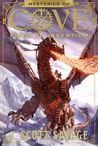
Fires of Invention by J. Scott Savage

Fires of Invention (Mysteries of Cove, #1)Fires of Invention by J. Scott Savage

My rating: 5 of 5 stars


Review copy provided by Netgalley

This was a most unusual mixture of science fiction, dystopia, and fantasy. In the underground city of Cove, where technological advancement has been brought to an utter and complete stop, Trenton is at odds with himself. He is a mechanical whiz with a penchant for seeing potential improvements to his city's machinery and equipment, but also a devout believer in the city philosophy that curiosity, creativity, and inventiveness brought about the downfall of mankind everywhere except for Cove.

Trenton deals with a heavy sense of self-loathing as his mind continues to create while his sense of duty tells him that he should be able to suppress his creative urges. Into this mix comes Kallista Babbage, the only daughter of infamous inventor, Leo Babbage. She's not an easy sort of personality to be around, having lived most of her life as a defensive loner. She is a strong individual, hellbent on vindicating her father's work and restoring his reputation, which is is in ruins after an explosion that supposedly killed him and a number of residents in an apartment building where he was fixing a water heater.

Though their initial meeting is brought about by happenstance and Trenton is understandably resistant to being associated with Kallista, the two characters begin to work together when Trenton's mother prevents him from receiving an assignment to become a mechanic and he finds himself unable to pursue the career path that he has aspired to for as long as he can remember. What ensues is whirlwind adventure wherein Trenton and Kallista discover information that breaks down their previously held perceptions about their city and its beliefs. There is great risk and dire consequences for their behavior, but as information leads to inspiration and inspiration leads to invention, they both realize that there is no turning back for either of them.

This is a beautiful story, one that will leave readers both reeling and thoughtful. Characters are complex and multi-dimensional, and themes such as trust as friendship are as central to the plot as the "steam-punk" mechanical drive of its protagonists. I was more than a little impressed with this story as a whole. I can't wait to get my hands on the next volume in this middle grade series. This is sure to be a hit with the upper middle grade crowd as well as the young adult audience.


View all my reviews

Thursday, April 14, 2016

Scrap City by D.S. Thornton

Scrap CityScrap City by D.S. Thornton

My rating: 5 of 5 stars


Review copy provided by Netgalley

This book sucked me in and stole hours of sleep, something I don't get enough of as is, but I don't hold that against it because it gave me hours of pleasure in return. It was hardly typical of the fantasy genre with the overabundance of robot-like characters called Scrappers, but this was a worthwhile read in the fantasy genre.

Jerome Barnes is a protagonist that comes with a lot of baggage. His mother and his younger brother, Max, died tragically in an accident and Jerome blames himself. As a result, he isolates himself from others as he has lost all faith in the dependability of relationships. His father is dealing with the loss by throwing himself into his work as a real estate agent, making Jerome feel even more isolated.

The story springs out of Jerome tagging along on one such real estate deal, as his father attempts to convince the town junkman to sell his junkyard to a developer. While at the junkyard, he meets a mechanical boy named Arkie and is drawn into a secret world that exists at the junkyard.

This book really had me hooked from fairly on. At times, Jerome was hard to take since he puts on such a flinty exterior, treating Cici, a girl who tirelessly tries to be friends with him, like a nuisance, but you can tell through it all that he is just a kid dealing with a bad situation in the only way he knows how.

The Scrapper world of Smithytowne is definitely the most alluring part of this story. It has a Hogwarts-like appeal,a world that exists alongside the rest of the world, yet remains entirely undetected. There is a magical element in what brings the Scrappers to life, but it's a minimal piece of the story. Mostly, the story is centered on equal parts mystery and adventure as Jerome becomes more entangled in the world of the Scrappers and the effort to save the junkyard that Smithytowne lies beneath from what turns out to be an evil developer.

While I don't read stories like this often, I was impressed by this from start to finish, and I am certainly going to add it to my library collection as soon as I can. I recommend that elementary and middle school libraries all do the same. If you don't, you're missing out. This was a real pleasure to read.


View all my reviews

Saturday, January 30, 2016

Chasing Secrets by Gennifer Choldenko

Chasing SecretsChasing Secrets by Gennifer Choldenko

My rating: 5 of 5 stars

Review copy provided by Netgalley

Anyone who knows Choldenko's other work is sure to approach this one with high expectations, and happily, I can report that they will not be disappointed with the results here. I feel like this book could be called the West Coast's equivalent of Fever 1793 by Laurie Halse Anderson which was set in on the East Coast in colonial Philadelphia. However, the major difference between these two outbreaks is of course the fact that the San Francisco outbreak carried with it this terrible weight of secrecy.

Reading this, I was most impressed with the scope of different issues that Choldenko addressed in one book. There were the issues of ethnic discrimination and prejudice in turn-of-the-century San Francisco, the gender roles that limited girls and women to a powerless existence in many cases, the economic class struggles limiting citizens access to adequate medical care and educational opportunities, and most perplexing of all, the medical practices of the time and the generally poor conditions that physicians were forced to work under.

I found the main character, Lizzie, to be inspiring and unflinchingly honest. She had several personal trials to overcome in this story, but they paled in comparison to the societal troubles she faced. The time of this novel, 1900 in San Francisco seems almost unrecognizable to a reader today, and yet Choldenko gave the the landscape a surge of reality throughout that kept the story engaging and relatable.

This is an exceptional piece of historical fiction, one that could generate extensive conversation among readers. It certainly deserves a place in the classrooms of elementary and middle schools all across the country just as much as any of her Al Capone titles. It has so much teachable content that it would be a shame to let this one slip by. The entire book is very well done.

View all my reviews

Friday, April 22, 2011

Book 7: Captain Underpants and Big, Bad Battle of the Bionic Booger Boy, Part 2


Before you ask me why I didn't bother to include "The Revenge of the Ridiculous Robo-Boogers" in the above title, see my explanation for the same problem in my book 6 entry and move on with your lives. Now, to more pressing matters, like my omission of a V.I.H. (that's Very Important Hamster) from my review of book 6. That's right, everyone! I did an entire review of Captain Underpants and the Big, Bad Battle of the Bionic Booger Boy, Part 1 without mentioning the hero of the story, Sulu the Bionic Hamster.

So Sulu, as you might have guessed, is a hamster and he's bionic. He's truly the sort of pet that every child should dream of having. At the start of book 6, Sulu was a non-bionic hamster belonging to Melvin Sneedly, but by the end, Sulu was a heroic, monster-fighting super hamster living in George and Harold's tree house. Quite a transformation to undergo in about 160 pages, and yet he didn't even get an honorable mention in my review. That's just unacceptable. I should be banned from the series for such an omission. So I'm going to make it up to him now, in CAPITALIZED, BOLD, ITALICIZED, PARTIALLY UNDERLINED PRINT!

SULU THE BIONIC HAMSTER, I AM SO SORRY THAT I DIDN'T MENTION YOUR HEROIC DEEDS IN THE BATTLE OF THE BIONIC BOOGER BOY, PART 1. I COMMITTED AN EGREGIOUS ERROR BY OMITTING THE FACT THAT IT WAS YOU, SULU, THAT SAVED HAROLD AND GEORGE FROM THE ALL-CONSUMING EVIL OF YOUR FORMER OWNER, MELVIN SNEEDLY. YOU ARE A CREDIT TO ALL THAT IS ROBOTIC AND RODENT IN THE WORLD. WE ARE FOREVER IN YOUR DEBT, SULU!

Well, now that that's over, let's get down to book 7, the unnecessarily long story of Melvin's second attempt to use evil brilliance to take over the world and become popular. So part 2 of the Bionic Booger Boy epic was not really about a bionic booger boy as much as it was about the brain switcheroo at the end of part one. Within the first chapter, Sulu the Bionic Hamster managed to fire the robo-boogers into outer space where they took a backseat role to Melvin for most of the book. In essence, Carl, Trixie, and Frankenbooger took up a supporting role even though they were the focus of the entire ridiculous subtitle of the book. Melvin and Krupp stole the storyline from Freaky Friday, each taking on the body of the other. That got old fast, but Dav Pilkey did have the decency to assure that our suffering would be over by chapter 17.

Anyway, the discovery that they had been switched was quickly followed by several convoluted plans to undo the damage, culminating in the most convoluted of all, to build a time machine ala Back to the Future and go back in time to nab the Combine-O-Tron 2000 before it was destroyed. This sounds foolproof, right? Ha! At least there wasn't a lot of space time continuum jabber to stumble through. Pilkey was more interested in making references to how painfully aware everyone was that they were merely characters in an absurd children's book. Like they always say, if something draws out a laugh the first time, do it over and over again.

So George and Harold recklessly careen through time, doing whatever it takes to get back the Combine-O-Tron 2000 including stealing a pterodactyl from the Mesozoic Era to hijack the librarian's car. Long story short, they succeed and Melvin modifies the machine to steal Captain Underpants's superpowers for himself, succeeds, and still doesn't get the recognition he's after. Captain Underpants, Harold, and George head off to battle against Carl, Trixie, and Frankenbooger, who have miraculously returned via Poopsie the space shuttle, and manage to overcome the robo-boogers even without their superpowers. The hidden moral seems to be "you can't buy friendship." Dav Pilkey would certainly be horrified to discover that he had written a second moralistic adventure in his series of amoral fiascos, but it happened anyway.

One more book to go and I'm still standing. Will I make it through this last volume? Check back tomorrow to find out!

Tuesday, April 19, 2011

Book 4: Captain Underpants and the Perilous Plot of Professor Poopypants


Hooray! I'm halfway there. I have to say, I expected my face to be set in a permanent cringe by this point, but it's not. This series isn't as terrible as I was convinced it would be. It's funny. Sure, all the stories are nearly identical in structure, and if a joke worked in book one, it's still being used in book four, but sometimes a joke can still be as funny the fourth time as it was the first. I don't mind that. Some of the best gags in the history of comedy were based on solid repetition. Who can forget the longest knock-knock joke ever? You know the one. The guy keeps knocking on the door and saying banana until finally the home owner presumably opens up holding something large and menacing and growling because the guy changes his tune and says orange and the joke mercifully comes to a close.


Then again, no one ever laughs at that joke. They usually end up chasing the person who told it down the street with torches and pitchforks. Dav Pilkey, I won't chase you around with a torch and pitchfork for reusing the same jokes again and again. I don't advise anyone else to do that either. I'm sure he's a nice guy. His sense of humor might begin to wear on you after a while, but that's no reason for joining a pitchfork toting mob.

Anyway, Professor Pippy Pee-Pee Poopypants was quite the alliterative mess. His backstory in the geographically interesting land of New Swissland (I say interesting because it's described as being "just southeast of Greenland" i.e. Iceland) where everyone has silly names, left me wondering whether Pilkey has any fans in Reykjavik. If anyone has good reason to brandish torches and pitchforks at Mr. Pilkey, the people of Iceland might. Among all the "epic novels" that I've read, Poopypants was the first villain I actually felt bad for. In fact, changing everyone's name to give them a taste of their own medicine almost seemed just after they laughed him right out of the world of academia and never gave him a chance to share his inventions. He's no hero though. He proved that when he treated his assistant like he was less valuable than dirt. If only he hadn't decided to rename himself Tippy Tinkletrousers from jail, this story could have had a happy ending for everyone involved.

I love the running joke with the little boy who always happens to witness the most unlikely moments of each story, and consistently tells his mother what he saw only to be told that he is making everything up. They usually make only one appearance per book, but in this one they showed up twice, both times running the observant son and oblivious mom bit to perfection. That wasn't the only first in this volume though. This book also marked the first time in the series when George and Harold purposely turned Mr. Krupp into Captain Underpants to try and save the day. That's not a big surprise since during the third book Captain Underpants drank superhero juice meaning he is now a bonafide superhero when the clothes come off. I suspect that will start happening more often in the books to come, but I guess I'll have to wait and see.

Well, that about does it for book four. The Wrath of the Wicked Wedgie Woman is up next, but before I sign off for today I'd like to mention some disturbing news I happened upon last night. Someone beat me to the punch in my little Captain Underpants challenge. Before I even conceived of the idea to blog about my Underpants experience, someone out there had already blogged their way through book four. Since then, that same blogger polished off book five and one can only presume that book six can't be far off. I really enjoyed her thoughts on the books she's read so far, so I only think it fair to offer her thoughts up to anyone who has been following my efforts. That's right, I take care of my readers, all two of you. The blog I'm referring to is Kids Tails and the blogger is Michele Lee. Check it out if you have the chance. It's sure to be worth your time, especially if you assign so little value to your time that you bothered to read this post all the way to the end. Just kidding. Don't stop reading.

Monday, April 18, 2011

Book 3: Captain Underpants and the Invasion of the Incredibly Naughty Cafeteria Ladies From Outer Space (and the Subsequent Assault of the Equally Evil Lunchroom Zombie Nerds)

To begin with, that title could have been an entire chapter by itself! But I suppose this is the era of the long title and that's what you get with a series like Captain Underpants. This book was a bit more of the same running gag with a new twist. Now, instead of Mr. Krupp mistakenly believing that he is a superhero named Captain Underpants, he actually will be a superhero, though that development doesn't come until the end of this volume of Underpants. Also, the villains have stepped up a notch. Aliens coming to take over the world and coincidentally choosing Horwitz Elementary as the headquarters of their evil plan was certainly a convenient twist. This doesn't bode well for the rest of the series. Already Mr. Pilkey is resorting to some pretty far-fetched gimmicks to squeeze another story out of his hat.


I'd call this amping up of the series a typical choice though. Harry Potter amped up at book three. So did Gregor the Overlander and Percy Jackson and the Olympians. Book three is usually the game changer for whatever reason. The danger takes a step in the messy direction, the heroes come to some realization of their true potential, things just start to happen. Things are no different in this series. Sorry if I'm letting a secret go here, but the Mr. Krupp edition of Captain Underpants gets superpowers in this book. He actually manages to fight off a mutant dandelion beast, rather than getting caught by the bad guys and waiting on George and Harold to save the day.


There was also one moment here in which George and Harold did something so out of character and noble that I had to read it twice just to make sure I'd read it right. It came as they were trapped in a cage in the aliens' spaceship. George and Harold worked together to do something in the best interests of planet Earth by putting their own lives in danger. When did the two of them grow a conscience? It must have been somewhere between book two and three. Could they be growing a respectable character? Too soon to tell. We'll just have to wait and see, just like whether or not I make it to the end of this challenge.


The next book is the halfway point. The title is a bit shorter, but here comes Professor Poopypants, a real crowd pleaser if Captain Underpants ever created one. I think I've managed to cling to my sanity so far, so keep on reading, because a nervous breakdown can't be far off. My father has concerns that I'm hanging one foot off the deep end here, and I'd hate to just dangle one foot over the abyss without taking the leap at some point.

Sunday, April 17, 2011

Book 2: Captain Underpants and the Attack of the Talking Toilets


"I would start drawing a picture of this chubby super-hero looking guy, while I talked about creating my own comic books. Then I would tell my audience the name of the character I was drawing. When I said the words 'Captain Underpants', all the kids would burst out laughing. I'd draw the underwear and the cape, and the kids in the audience LOVED it! Finally, I'd mention the title of one of the comics I had created as a kid. It was called 'Captain Underpants and the Attack of the Talking Toilets'. When the kids heard that title, the room would EXPLODE with laughter!"— Dav Pilkey

I figured that I'd open with a Dav Pilkey quote today, so the above comes direct from Dav Pilkey's website. Anyway, I finished book two and I'm still here. The realization that I'm coming to is that he's writing a series for the audience that probably turns to television more often than the library for their entertainment. The humor in this book would seem relatively mild were it featured in Spongebob Squarepants, so no I'm not offended by it. I think that the teachers are poor representations of real teachers, though I suspect that they are poor enough that any reader, even a child, would understand that.

George and Harold are basically the same delinquents they were in the first book. In a real school system, their parents would have been forced to home-school them and spend their every waking hour trying to keep them out of juvenile hall. Their pranks are your basic extremely expensive property destruction variety that would be a one way ticket out of any school system with a hefty bill for parents. The difference is of course that the staff and principal are all monstrously bent on George and Harold's demise, which is giving a couple of pranksters much more credit than they would get in reality.

So, the name of the game seems to be the running gag. A lot of the jokes and humorous reactions were rehashed in this volume. Basically, this works a lot like a comic book or a children's cartoon series on television. I'm reminded of my favorite show growing up, Pinky and the Brain. If Pinky didn't ask Brain, "So, Brain, what are we going to do tonight?" and Brain didn't respond, "The same thing we do every night, Pinky! Try to take over the world!" the episode just never would have happened. If the Brain didn't ask Pinky, "Pinky, are you pondering what I'm pondering?" and Pinky didn't respond, "I think so Brain, but..." only to finish with some craziness, I think the show might have been cancelled on the spot. The same goes here.

The set-up was not so very different from the first book. The boys commit some heinous act of prankery, get away with it, villainize the staff for trying to prevent its recurrence, and are validated by the staff overreacting with evil and maniacal glee at their plan to prevent it in the future with torturous punishment. There are your first fifty pages. Then the boys manage to create havoc despite the punishment, it gets out of hand, Captain Underpants is awoken only to get in over his head, at which point the boys save him and find a way out of Mr. Krupp's endless punishment. That's the rest of the book. Oh, and whenever the action reaches a comical climax, Pilkey drops some Flip-O-Rama into the mix.

It's still funny. It's different enough to qualify as a new story. There is still that added element of an extra layer of humor for the observant reader. Overall, these aren't bad books. They're not great either, but if children are open to reading them, I say let them. I would advise that an adult just cautions the child that what they read is not an example of how things are supposed to work. Then again, if a kid doesn't figure that out on their own, chances are that things weren't quite right to begin with and this isn't going to make it any worse. Pranking isn't harmless fun, as George and Howard suggest. But looking at the reaction of the other children of Horwitz Elementary who are often the butt of the pranks, you can see that's the case. They don't look at George and Howard as heroes. In most cases, George and Howard are afraid that the other children will find out that they are behind the pranks. They know the other kids don't see the humor in ruining extracurricular school events.

That being said, I don't believe that the books condone George and Howard's actions. They just fail to condemn them, which isn't great either but it could be worse. Anyway, next up in my challenge is book three, Captain Underpants and the Invasion of the Incredibly Naughty Cafeteria Ladies from Outer Space. There's a subtitle too, but I'm too tired from the first part to finish. Wish me luck.

Sunday, December 5, 2010

The Girl Who Could Fly by Victoria Forester

When I read the dust jacket blurp written by none other than the renowned Stephanie Meyer of Twilight series fame, I still bought it against my better judgement, and I'm glad I did. She called it the "oddest/sweetest mix of Little House on the Prairie and X-Men." Not being a big fan of Meyer's series, the Little House books, or X-Men, I wasn't expecting much from this. What a pleasant surprise it was to open it up and find that Victoria Forester is a writer with a keen grasp on character voice, plot, and pacing.


The protagonist, Piper McCloud, is a genuinely likable character whose suffering was difficult to read primarily because I really wanted things to work for her so badly. It was a compelling read. There were times when I wanted to put it down and attempt to forget that I'd ever read the first page, but I think that's the sign of a book that refuses to waver from authentic storytelling. Sometimes a story can get ugly and the suffering can get hard to read. However, that's not what made the book so enjoyable. This book's greatest strength is its supporting cast. Although most children's books leave you with a clear opinion about the characters, Forester makes it difficult to form a clear opinion on hers.


She writes in flaws that leave you wondering whether anyone (aside from Piper) is truly good or bad. The two characters that typify this are Betty McCloud and Conrad Harrington III. Neither one is really a bad person and in many ways they are Piper's strongest allies at different times during the story, but they both exhibit character flaws that make them simultaneously infuriating.


There were times when I was hoping to read that someone had pushed Conrad off a tower and watched him go splat on the floor below, and I have to say that finding out that he was actually plotting an escape from that school hardly affected my opinion of him. If it hadn't been for the miserable treatment he'd received from his parents and the deceit of Letitia Hellion, Conrad would have been irredeemably evil. Though I suppose someone could just as easily argue that without those two issues Conrad would probably have been a much different person. I guess that's all part of the intrigue.


Betty McCloud is simultaneously all that is wrong with excessively traditional conservative life and all that is right with it. She doesn't condone anything that hasn't always been done and goes so far as to alienate herself from her own daughter. Yet, she is acting from what seems to be the best intention. She believes that she is doing what is best at all times. Her limited worldview defines her character, and her gradual growth is spawned from the broadening of her worldly knowledge. Her disapproval of flying spawns Piper's shame of her own gift and all the calamity that follows grows out of that. Anyone might argue that Betty's disapproval is representative of the town she lives in and that even if Betty approved, the town still would have caused just as much of an issue. What can I say? It's food for thought.


Either way, this is definitely worth the read. There's another book on the way too. It'd be impossible to deny it. The ending did everything short of offer a preview chapter with the next title. When it does come, I'll be ready for it. I just hope it lives up to the first one.